
Kilimanjaro Rongai Route
Map, Cost, Itineraries And Climbing Guide
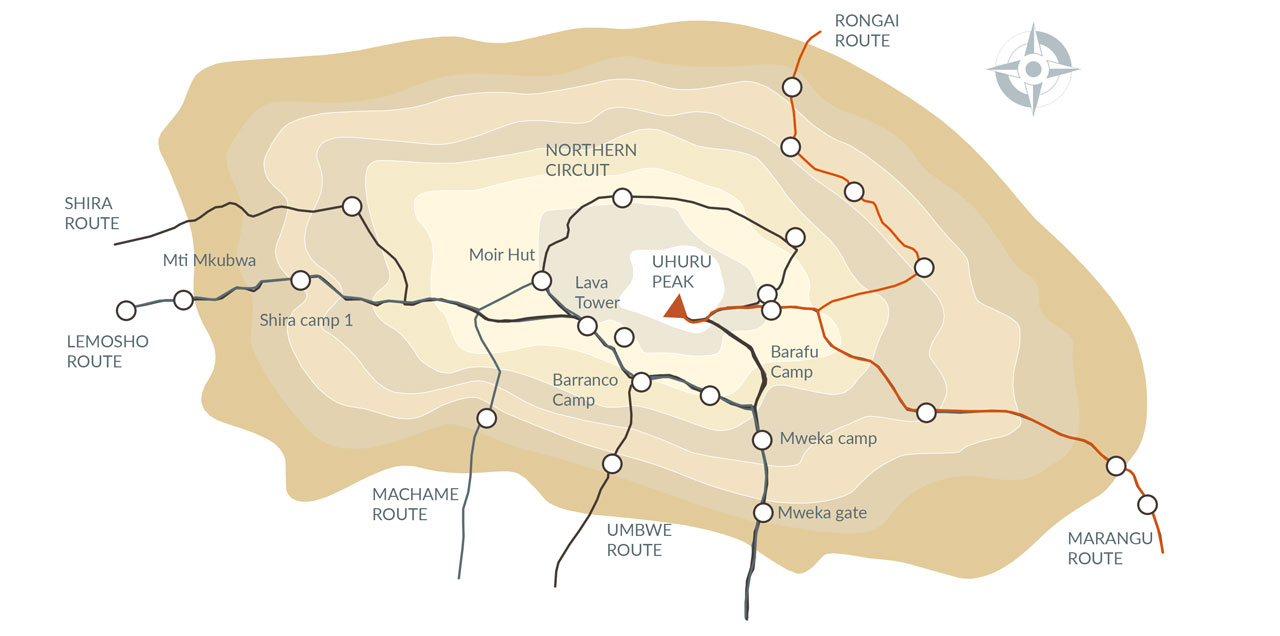
The Kilimanjaro Rongai Route is the only Mount Kilimanjaro route that approaches the mountain from the northern side, close to the Kenya border. Renowned for its peaceful trails, gradual ascent, and drier climate, it is an excellent choice for climbers seeking a quieter alternative to the more popular southern routes. With fewer trekkers on the trail, the Rongai Route offers a remote wilderness experience while still leading to the highest point in Africa, Uhuru Peak (5,895 m / 19,341 ft).
Starting at Nalemoru Gate, the route passes through unspoiled rainforest, open moorland, alpine desert, and the dramatic lunar landscape surrounding Kibo Peak. Although it provides fewer acclimatization opportunities than routes such as Lemosho or Machame, its gentle gradient makes the daily trekking less physically demanding. For the best balance of comfort and summit success, we recommend the 7 Days Rongai Route, which allows more time to adapt to the altitude.
After reaching the summit via Gilman’s Point and Uhuru Peak, climbers descend on the Marangu Route, offering the unique opportunity to experience two different sides of Mount Kilimanjaro during a single expedition.
Whether you’re looking for fewer crowds, a scenic northern approach, or a climb during the rainy season when the northern slopes are typically drier, the Rongai Route provides an unforgettable Kilimanjaro adventure.
Rongai Route Overview
| Feature | Details |
|---|---|
|
Route Length |
6 or 7 |
|
Difficulty |
Moderate |
|
Summit Success Rate |
High (especially the 7-Day itinerary) |
|
Starting Point |
Nalemoru Gate (Northern Kilimanjaro) |
|
Accommodation |
Camping |
|
Highest Point |
Uhuru Peak – 5,895 m (19,341 ft) |
|
Best For |
Quiet Treks, First-Time Climbers, Nature Lovers & Dry Season Climbs |
|
Route Side |
Northern Side of Mount Kilimanjaro |
|
Descent Route |
|
|
Scenery |
Excellent – Rainforest, Moorland, Mawenzi Views, Saddle Plateau & Alpine Desert |
|
Crowds |
Low – One of Kilimanjaro’s Quietest Routes |
|
Summit Night |
Kibo Hut to Uhuru Peak |
|
Recommended Itinerary |
Is the Rongai Route the Best Route on Kilimanjaro?
The Rongai Route is one of the best routes on Mount Kilimanjaro for climbers seeking a quieter and more remote trekking experience. As the only route approaching the mountain from the northern side, it receives fewer visitors and generally drier weather, making it an excellent option during the rainy seasons.
The route follows a gentle gradient, making the daily hiking less physically demanding than steeper routes such as Machame or Umbwe. While the Rongai Route offers fewer acclimatization opportunities than the Lemosho Route, choosing the 7 Days Rongai Route significantly improves your chances of reaching Uhuru Peak (5,895 m).
If your priority is peaceful trails, a gradual ascent, and a unique northern approach, the Rongai Route is an excellent choice. However, if you are looking for the most scenic route with the highest summit success rate, the Lemosho Route may be a better option.
How Much Does the Rongai Route Cost?
The cost of climbing the Kilimanjaro Rongai Route depends on the itinerary you choose, the size of your group, and whether you book a private trek or join one of our group departures. The 7-day itinerary costs slightly more than the 6-day option because it includes an extra day on the mountain, giving climbers more time to acclimatize and increasing their chances of reaching Uhuru Peak (5,895 m).
If you’re traveling on a budget, joining one of our scheduled Rongai Route group climbs is a great way to reduce the overall cost while enjoying the same experienced mountain guides, quality camping equipment, and professional support. For those who prefer flexibility, privacy, and a customized itinerary, our private Rongai Route climbs are the perfect choice for couples, families, and groups of friends.
Rongai Route Price
| Price for 7 Days | Price for 6 Days |
|---|---|
|
1 Person: $2,375
|
1 Person: $2,210
|
|
2 people: $2,040 per person
|
2 people: $1,875 per person
|
|
3 people: $1,910 per person |
3 people: $1,750 per person
|
|
4 people: $1,830 per person
|
4 people: $1,670 per person
|
|
5 people: $1,785 per person
|
5 people: $1,630 per person
|
|
6 people: $1,765 per person
|
6 people: $1,615 per person
|
|
7+ people: $1,765 per person |
7+ people: $1,595 per person |
Rongai Route Itineraries
6 DAYS RONGAI ROUTE
- Northern Kilimanjaro
Experience Kilimanjaro’s only northern approach, offering peaceful trails, fewer crowds, and stunning views on the journey to Uhuru Peak.
7 DAYS RONGAI ROUTE
- Northern Kilimanjaro
The 7 Days Rongai Route uses the sole route that approaches Kilimanjaro from the north, near the Kenyan border, is the Rongai Route.
Rongai Route Map
Landscapes and Scenery on the Rongai Route
The Rongai Route offers a unique and diverse trekking experience, approaching Mount Kilimanjaro from the quiet northern side near the Kenya border. Known for its peaceful trails and remote wilderness, the route passes through several ecological zones, each with its own distinctive scenery.
The adventure begins in the northern rainforest, where climbers hike through woodlands filled with native trees, birds, and occasional wildlife such as colobus monkeys and antelope. As the trail ascends, the forest gradually gives way to open heath and moorland, featuring giant groundsels, lobelias, and sweeping views across the Kenyan plains.
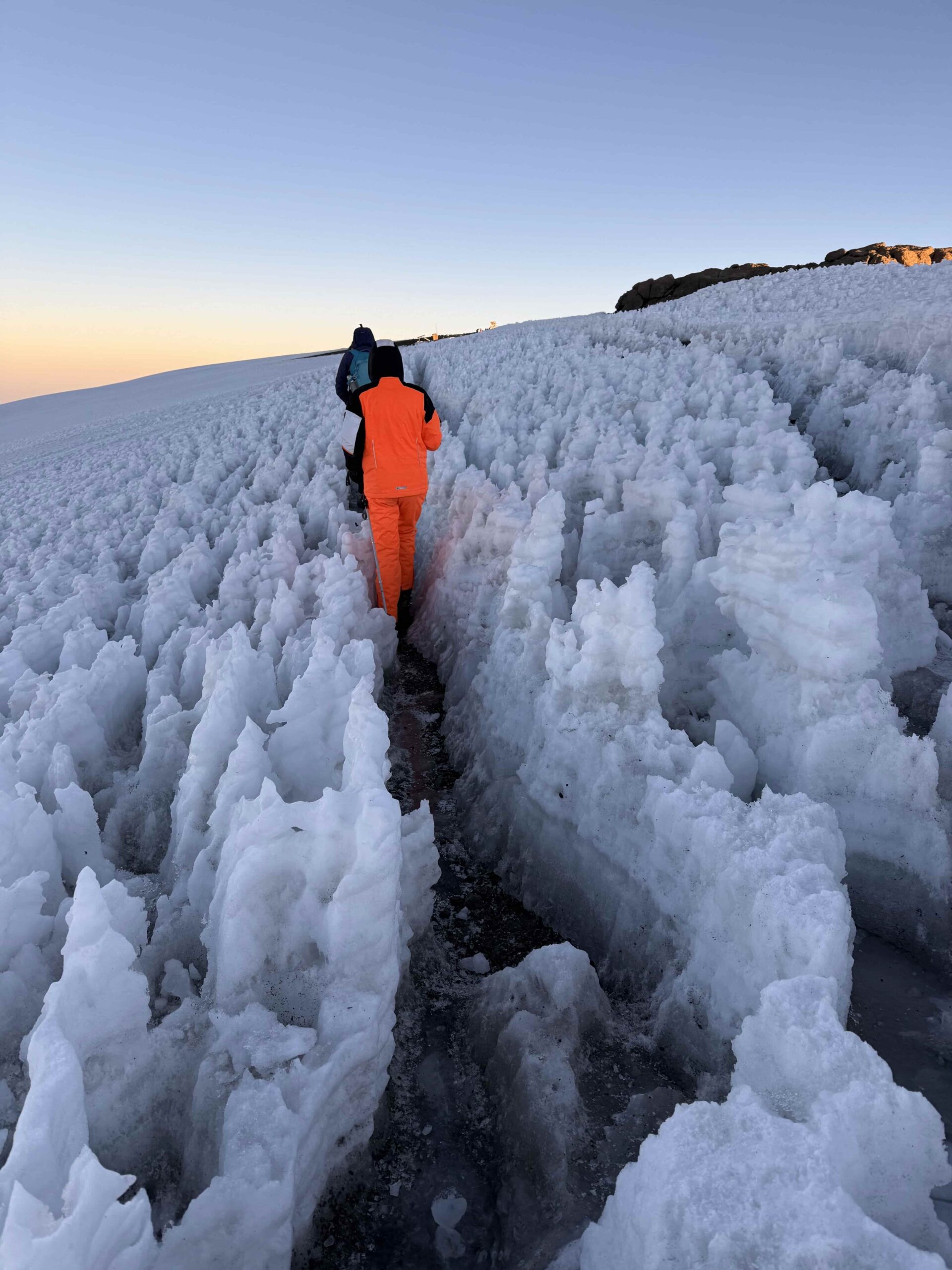
Higher on the mountain, the landscape transforms into a rugged alpine desert with volcanic rock formations and expansive views of Kibo Peak. On summit night, climbers reach Gilman’s Point before continuing to Uhuru Peak (5,895 m), where breathtaking sunrise views, glaciers, and the vast African landscape create an unforgettable reward.
After the summit, the descent follows the Marangu Route, allowing trekkers to experience a different side of Kilimanjaro with its lush vegetation and changing scenery. This combination of a quiet northern ascent and a southern descent makes the Rongai Route one of the most unique and rewarding routes on Mount Kilimanjaro.
How Difficult Is the Rongai Route?
The Rongai Route is considered a moderate Kilimanjaro trekking route, making it a popular choice for climbers looking for a less demanding ascent. Although the trail is not technically difficult and requires no climbing experience, the biggest challenge is the high altitude, especially on summit day.
Compared to steeper routes like Machame and Umbwe, the Rongai Route follows a more gradual gradient, making the daily hikes more comfortable. However, because it offers fewer opportunities for the “walk high, sleep low” acclimatization method, we recommend the 7 Days Rongai Route to improve acclimatization and increase your chances of reaching Uhuru Peak (5,895 m).
Most trekking days involve 4 to 7 hours of hiking, while the final summit push takes 10 to 14 hours, including the descent to camp. Good physical fitness, proper preparation, walking at a steady “pole pole” pace, and staying well hydrated are essential for a safe and successful climb.
With the support of the experienced local mountain guides at Materuni Tours & Safaris, even first-time high-altitude trekkers can confidently take on the Rongai Route and enjoy an unforgettable Mount Kilimanjaro adventure.
Rongai Route Summit Success Rate
The Rongai Route has a good summit success rate on Mount Kilimanjaro thanks to its gradual ascent and less physically demanding trail. While it offers a comfortable climb, it provides fewer acclimatization opportunities than routes such as Lemosho because it does not follow the “walk high, sleep low” principle as extensively.
Success rates vary depending on the itinerary length:
6-day itinerary: approximately 65–75% summit success rate
7-day itinerary: approximately 75–85% summit success rate
The 7-day itinerary includes an extra acclimatization day, giving climbers more time to adjust to the altitude and improving their chances of reaching Uhuru Peak (5,895 m) safely and comfortably.
For this reason, Materuni Tours & Safaris recommends the 7 Days Rongai Route for the best balance of comfort, acclimatization, and summit success. With proper preparation, a steady “pole pole” pace, and the support of our experienced local mountain guides, the Rongai Route is an excellent choice for climbers seeking a quieter path to the Roof of Africa.
Pros and Cons of the Rongai Route
Pros
- The only route that approaches Mount Kilimanjaro from the northern side
- Quieter and less crowded than most other Kilimanjaro routes
- Gradual ascent makes daily trekking more comfortable
- Drier conditions make it an excellent choice during the rainy seasons
- Good summit success rate, especially on the 7-day itinerary
- Descends via the Marangu Route, allowing climbers to experience two different sides of the mountain
Cons
- Fewer acclimatization opportunities than the Lemosho Route
- Less scenic than the Lemosho and Machame Routes
- Lower summit success rate on the 6-day itinerary
- Camping only, with no mountain huts available
- Longer summit day with a challenging final ascent
- Limited route options, as all climbers descend via the Marangu Route
How to Prepare for the Rongai Route
Climbing Mount Kilimanjaro via the Rongai Route requires good physical fitness and careful preparation. Although the Rongai Route is considered one of the easier routes due to its gradual ascent, reaching Uhuru Peak (5,895 m) is still a high-altitude challenge that requires endurance, determination, and proper acclimatization.
To prepare for your Rongai Route trek, we recommend:
Regular hiking or long walks to build stamina
Cardiovascular exercise such as running, cycling, or swimming
Strength training to improve leg and core muscles
Practice hikes with a loaded backpack
Following a healthy diet and staying well hydrated before your climb
The Rongai Route passes through several climate zones, from the cool northern forest to the alpine desert and freezing temperatures near the summit. Packing the right clothing and equipment is essential to stay comfortable and safe throughout the trek.
Choosing the 7 Days Rongai Route gives your body more time to acclimatize, increasing your comfort and improving your chances of reaching the summit. Combined with the support of experienced local mountain guides, proper preparation is one of the most important factors for a successful Kilimanjaro climb.
Before your adventure begins, make sure you have all the essential gear. Our Kilimanjaro Packing List provides everything you need to prepare for a safe, comfortable, and unforgettable Rongai Route experience.
Starting Point and Route Experience
The Rongai Route begins at Nalemoru Gate, located on the northern side of Mount Kilimanjaro near the Kenya border. This quieter approach offers a peaceful trekking experience, making it an excellent choice for climbers who prefer less crowded trails.
The trek starts through beautiful mountain forest, where you may spot colobus monkeys, colorful birds, and other wildlife. As you gain altitude, the landscape gradually changes into open heath and moorland with giant lobelias and groundsels, offering spectacular views across the northern slopes and the Kenyan plains.
Higher on the mountain, the trail enters the alpine desert before reaching Kibo Hut, the final camp before the summit attempt. Climbers then ascend to Gilman’s Point on the crater rim before continuing to Uhuru Peak (5,895 m), the highest point in Africa, where breathtaking sunrise views reward the effort.
Unlike most Kilimanjaro routes, the Rongai Route descends via the Marangu Route, allowing trekkers to experience two different sides of the mountain in a single climb. This combination of a peaceful northern ascent and a scenic southern descent makes the Rongai Route one of the most unique and rewarding ways to climb Mount Kilimanjaro.
Rongai Route vs Lemosho Route
The Rongai Route and Lemosho Route are both excellent options for climbing Mount Kilimanjaro, but they offer different experiences. Choosing the right route depends on your priorities, including scenery, acclimatization, crowd levels, and summit success.
The Rongai Route is the only route that approaches Kilimanjaro from the northern side near the Kenya border. It is known for its quiet trails, gradual ascent, and drier climate, making it an excellent choice for climbers who prefer fewer crowds and a peaceful trekking experience. The route follows a steady climb through forest, moorland, and alpine desert before reaching Uhuru Peak, then descends via the Marangu Route.
The Lemosho Route starts on the western side of the mountain and is widely regarded as one of the most scenic routes on Kilimanjaro. It crosses the spectacular Shira Plateau and follows the Southern Circuit through Lava Tower, Barranco Valley, and Barafu Camp. With its excellent acclimatization profile and diverse landscapes, the Lemosho Route offers one of the highest summit success rates on the mountain.
If you’re looking for a quieter route with a gradual ascent and fewer climbers, the Rongai Route is an excellent choice. If your priority is the best scenery, outstanding acclimatization, and the highest chance of reaching the summit, the Lemosho Route is generally the better option.
Rongai Route vs Lemosho Route Comparison
| Feature | Rongai Route | Lemosho Route |
|---|---|---|
|
Starting Point |
Nalemoru Gate (Northern side)
|
Londorossi Gate (Western side) |
|
Recommended Duration
|
6–7 days
|
7–8days |
|
Difficulty
|
Moderate
|
Moderate |
|
Acclimatization
|
Good (Best on 7 days)
|
Excellent |
|
Scenery
|
Very Good
|
Outstanding |
|
Trail Traffic
|
One of the quietest routes
|
Less crowded at the beginning |
|
Accommodation
|
Camping
|
Camping |
|
Best For
|
Climbers seeking quieter trails, gradual ascent, and a unique northern approach
|
First-time climbers, photographers, and those wanting the highest summit succes
|
|
Summit Success
|
High (especially 7 days) |
Very High (especially 8 days) |
Rongai Route vs Machame Route
The Rongai Route and Machame Route are two of the most popular ways to climb Mount Kilimanjaro, but they offer very different trekking experiences.
The Rongai Route approaches the mountain from the northern side near the Kenya border. It is known for its peaceful trails, gradual ascent, and drier conditions, making it an excellent choice for climbers who prefer fewer crowds and a quieter adventure. Although the route provides fewer acclimatization opportunities than Machame, the 7 Days Rongai Route offers a good balance between comfort and summit success.
The Machame Route, often called the “Whiskey Route,” starts from the southern side of Kilimanjaro and is famous for its dramatic scenery, including the Shira Plateau, Lava Tower, Barranco Wall, and the Southern Icefields. It follows the “walk high, sleep low” acclimatization principle, giving climbers a higher chance of reaching Uhuru Peak, especially on the 7-day itinerary.
If you’re looking for quiet trails, a gradual climb, and a unique northern approach, the Rongai Route is an excellent choice. If your priority is spectacular scenery, better acclimatization, and a higher summit success rate, the Machame Route is generally the better option.
Professional Guides on the Rongai Route
At Materuni Tours & Safaris, we believe that experienced local guides are the key to a safe and successful Rongai Route climb. Our professional mountain team has guided climbers from around the world to the summit of Mount Kilimanjaro, providing expert support from the first day of the trek to Uhuru Peak (5,895 m).
Our certified English-speaking guides are highly experienced on the Rongai Route and understand the mountain’s weather, terrain, and altitude challenges. They carefully monitor your health throughout the climb, helping you acclimatize properly while ensuring your safety and comfort every step of the way.
What You Can Expect on Every Rongai Route Trek
Certified and experienced local Kilimanjaro mountain guides
Daily health checks, including oxygen saturation monitoring
High-quality camping equipment and freshly prepared mountain meals
Professional porters and cook following ethical trekking standards
Friendly support before, during, and after your climb in Moshi
Personalized service from a local team with extensive knowledge of Mount Kilimanjaro
When you climb the Rongai Route with Materuni Tours & Safaris, you’re choosing a trusted local operator dedicated to providing a safe, enjoyable, and unforgettable Kilimanjaro adventure while giving you the best possible chance of reaching the Roof of Africa.
Climb the Rongai Route with a Local Kilimanjaro Team in Moshi
Every Rongai Route climb with Materuni Tours & Safaris begins in Moshi, the gateway to Mount Kilimanjaro and the perfect place to prepare for your adventure. As a locally owned tour operator based in Moshi, we have extensive knowledge of the mountain and years of experience leading successful Rongai Route expeditions.
Before your trek, you’ll meet your mountain guides for a detailed climb briefing, equipment check, and final preparations to ensure you’re ready for the journey ahead. Our experienced local team is committed to your safety, comfort, and summit success from the moment you arrive until you stand on Uhuru Peak (5,895 m).
As members of the local community, we take pride in providing authentic Tanzanian hospitality while delivering professional guiding services, quality equipment, and personalized support throughout your climb.
Before or after your Kilimanjaro adventure, you can also explore Moshi, visit Materuni Waterfall, enjoy a traditional Chagga coffee tour, relax at Chemka Hot Springs, or discover other unforgettable experiences offered by Materuni Tours & Safaris. These activities are the perfect way to complete your Kilimanjaro journey.
- Machame Route
- Marangu Route
- Lemosho Route
- Northern Circuit
- Umbwe Route
Kilimanjaro Climbing Guide
BOOK NOW