
Great Wildebeest Migration Safari
OVERVIEW
The biggest attraction to the Serengeti is the Wildebeest Migration. A natural phenomenon like no other. It begins in the Serengeti National Park near the Kenyan border when huge herds of wildebeests head for the greener grazing grounds of Kenya. The Migration starts in April each year. The herbivores of the Serengeti migrate across the southern plains, closely followed by the predators including large prides of lions. A Tanzania visit is incomplete without visiting this amazing park. The Serengeti home of the Wildebeest Migration is one of Africa’s true great parks.
Our Tour Packages are designed to cover all your adventure expectations and to make a remarkable life experience. Choose your favourite tour below and book with us.
One of the most incredible natural sights on the planet is the Great Wildebeest Migration. It is an annual migration of millions of wildebeest across the Masai Mara-Serengeti habitat, accompanied by enormous numbers of zebra, Grant’s gazelle, Thompson’s gazelle, elands, and impalas.
From July through September, the Mara hosts the Great Migration, which brings millions of wildebeest and zebra from Tanzania’s Serengeti to Kenya’s Masai Mara. The continuous fight for life during the wildebeest migration makes the Migration Season an especially thrilling time to visit Tanzania with Materuni Tours.
What Is the Great Migration?
The Great Wildebeest Migration is a year-round circular movement of wildlife through the Serengeti ecosystem in Tanzania and the Maasai Mara in Kenya. The migration is led mainly by wildebeest, accompanied by large numbers of zebras and gazelles. The animals travel continuously following rainfall patterns and fresh grass across the plains.
This migration is considered one of the Seven Natural Wonders of Africa and offers some of the best wildlife viewing opportunities in the world. Visitors can witness massive herds crossing rivers filled with crocodiles, predator hunts on the open plains, calving season in Southern Serengeti, and dramatic interactions between wildlife throughout the year.
Best Time To See Great Migration Safari
December to March – Calving Season
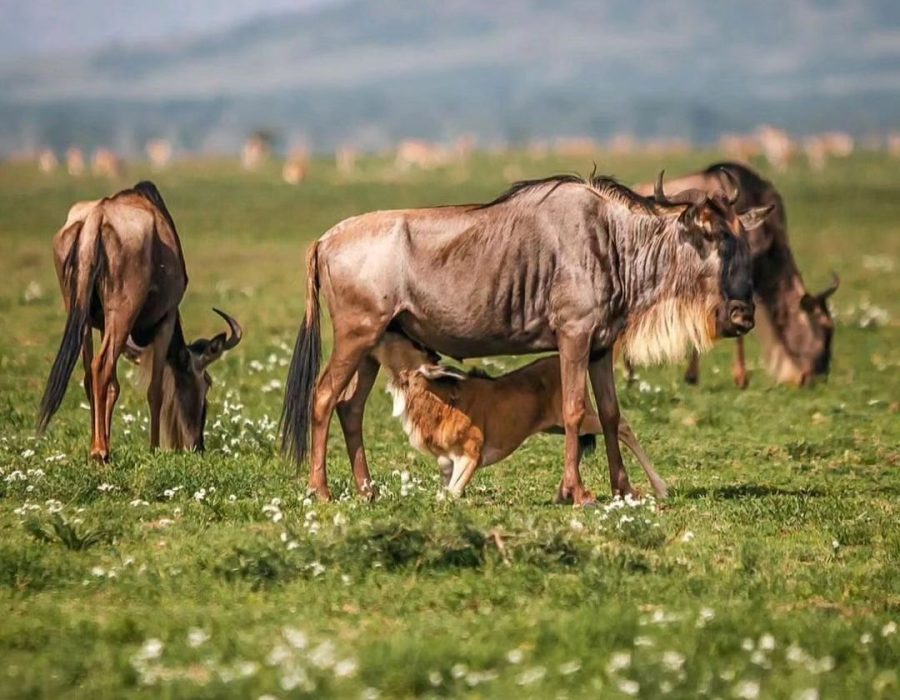
From December to March, the Great Migration moves to the Southern Serengeti and Ndutu plains, one of the most important breeding grounds in the Serengeti ecosystem. During this period, the short grass plains become rich in nutrients after the seasonal rains, attracting massive herds of wildebeest, zebras, and gazelles. This is the famous calving season, when more than 500,000 wildebeest calves are born within a short period, often with thousands of newborns arriving every day.
The calving season is considered one of the best times for a Tanzania Great Migration Safari because of the incredible wildlife activity and dramatic predator interactions. Lions, cheetahs, hyenas, leopards, and jackals closely follow the herds, creating excellent opportunities to witness hunting action and natural wildlife behavior. Since many calves are vulnerable during their first weeks of life, predator sightings are very common throughout the Ndutu and Southern Serengeti areas.
Unlike the dry season, the landscape during this time becomes beautifully green and scenic, offering excellent photography conditions with dramatic skies, fresh grasslands, and large concentrations of animals spread across the plains. The calving season also provides easier wildlife viewing because the herds remain concentrated in open areas rather than moving continuously over long distances.
The Ndutu region, located between the Ngorongoro Conservation Area and Serengeti National Park, becomes one of the best safari destinations in Tanzania during these months. Visitors can enjoy game drives across endless plains filled with wildebeest herds, zebras, predators, and numerous bird species while experiencing a quieter and more intimate safari atmosphere compared to peak river crossing season in Northern Serengeti.
April to June – Central Serengeti Migration
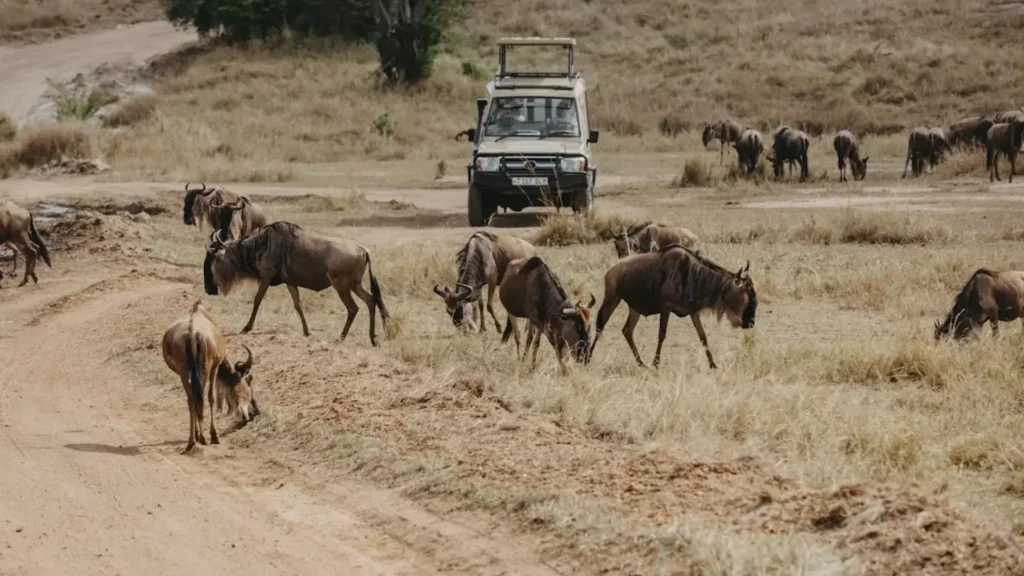
From April to June, the Great Migration begins moving north from the Southern Serengeti and Ndutu plains toward the Central and Western Serengeti. As the rainy season slowly comes to an end, the landscape remains green and beautiful while massive herds of wildebeest, zebras, and gazelles continue their journey across the endless Serengeti plains in search of fresh grazing land and water sources.
This period is one of the most underrated yet rewarding times for a Tanzania Great Migration Safari. The Central Serengeti, especially the Seronera region, becomes a prime wildlife viewing area as the migration passes through one of the richest wildlife habitats in the park. The region is well known for its year-round resident wildlife, including lions, leopards, cheetahs, elephants, giraffes, buffaloes, and hyenas, making it an excellent location for Big Five safaris and predator sightings.
During these months, visitors can witness large columns of migrating wildebeest stretching across the plains while predators closely follow the herds. The movement of the migration during April and May is often dramatic, with thousands of animals crossing rivers, gathering around water sources, and moving through the open savannah in huge numbers. This season also offers excellent opportunities to observe natural wildlife behavior away from the busier peak tourist months.
One of the major advantages of traveling during this time is the quieter safari experience. Compared to the busy river crossing season in Northern Serengeti, Central Serengeti during April to June offers fewer safari vehicles, more peaceful game drives, and a more intimate connection with nature. The scenery is especially beautiful, with green plains, dramatic skies, and excellent photographic conditions throughout the park.
By June, the migration often begins moving toward the Western Corridor and Grumeti region, where the herds prepare for the next stage of their journey toward Northern Serengeti and the Mara River crossings. This transition period creates excellent wildlife concentrations and unforgettable safari experiences across Central Serengeti
July to October – Northern Serengeti River Crossings
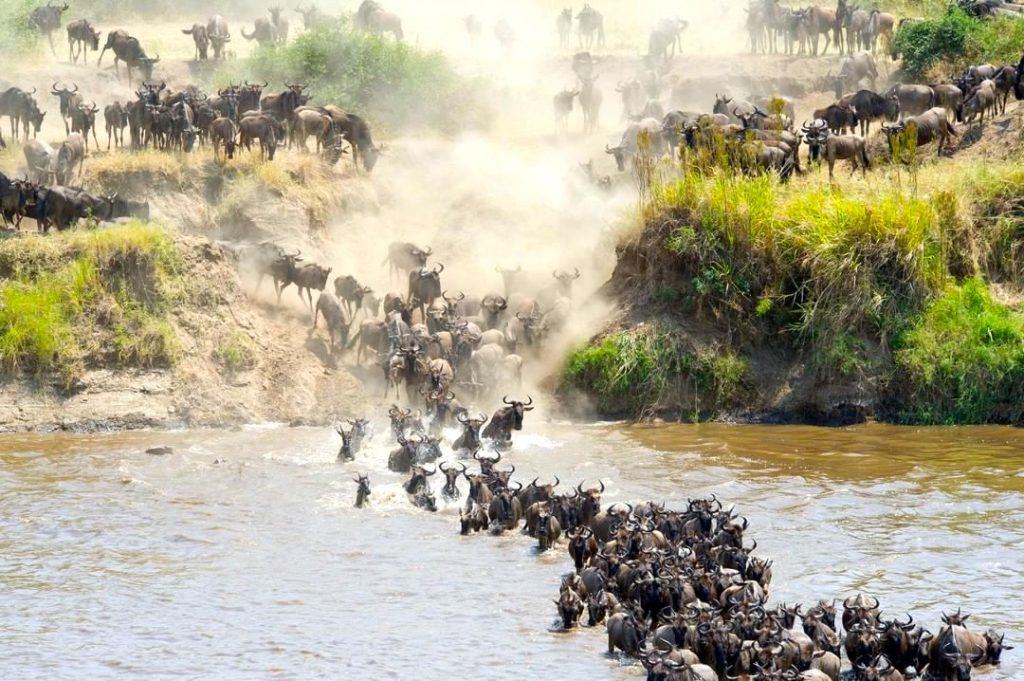
From July to October, the Great Migration reaches Northern Serengeti, marking the most dramatic and famous stage of the migration cycle. During this period, hundreds of thousands of wildebeest, zebras, and gazelles move north toward the Mara River in search of fresh grazing land. The river crossings in Northern Serengeti are considered one of the greatest wildlife spectacles in Africa and attract safari travelers from around the world.
The Mara River crossings are unpredictable and filled with intense wildlife action. Large herds gather along the riverbanks before suddenly attempting dangerous crossings through strong currents and deep waters inhabited by massive Nile crocodiles. These dramatic moments create unforgettable safari experiences and excellent opportunities for wildlife photography. Watching thousands of wildebeest leap into the river while predators wait nearby is one of the most exciting natural events in Tanzania.
Northern Serengeti during this season is also one of the best areas for predator sightings. Lions, leopards, cheetahs, and hyenas closely follow the migration herds, creating exceptional game viewing opportunities throughout the region. The open plains, rocky kopjes, river systems, and rolling hills of Northern Serengeti provide beautiful scenery and support a high concentration of wildlife during these months.
The river crossing season is often considered the peak safari period in Tanzania due to the large number of animals and dramatic wildlife interactions. In addition to the migration, visitors can also enjoy sightings of elephants, giraffes, buffaloes, hippos, topi, elands, and many bird species across the Serengeti ecosystem.
Unlike other times of the year when the herds spread across different regions, Northern Serengeti from July to October offers concentrated wildlife viewing and some of the most memorable safari experiences in Africa. The area around Kogatende and the Mara River becomes especially active as the migration repeatedly crosses back and forth between Tanzania and Kenya’s Maasai Mara ecosystem.
Migration Safari Packages
Great Migration Safari
- Wildlife Safari
Explore Serengeti’s wildebeest migration tours in Tanzania for 7 days up to the North Serengeti
Great Migration Safari
- Wildlife Safari
This tour takes you to the best national parks and reserves of the Northern Circuit. With this extended itinerary you will have the best chance of seeing all that Tanzania’s wildlife
Great Migration Safari
- Wildlife Safari
Explore the great wildebeest migration with this 5 days Safari to the Serengeti National Park and Ngorongoro. The Serengeti is one of the world’s most famous destinations,