
Rongai Route kilimanjaro

Rongai Route Kilimanjaro – Map, Difficulty & Itinerary Guide
Introduction
The Rongai Route Kilimanjaro is the only route that approaches Mount Kilimanjaro from the northern side near the Kenya border. Known for its quieter trails and remote wilderness feel, this route is ideal for climbers looking for a more peaceful trekking experience away from the busier southern routes.
The Rongai Route offers a gradual ascent through forest, moorland, and alpine desert landscapes before reaching the summit of Uhuru Peak (5,895m). Because the northern side of the mountain receives less rainfall, this route is often considered a good option during the rainy seasons.
Overview
The Rongai Route begins at Nalemoru Gate on the northern side of the mountain. The trail gradually climbs through open forest and moorland before entering the alpine desert zone near Kibo.
Compared to routes like Machame or Lemosho, Rongai offers a quieter trekking experience with fewer climbers on the trail. The ascent is more gradual, which many trekkers find comfortable, although the route provides fewer opportunities for the “walk high, sleep low” acclimatization pattern.
Because of this, a 7-day itinerary is recommended to improve acclimatization and summit success.
After reaching the summit via Gilman’s Point and Uhuru Peak, climbers descend via the Marangu Route, allowing trekkers to experience a different side of Mount Kilimanjaro on the way down.
Overall, the Rongai Route Kilimanjaro is an excellent choice for climbers seeking a quieter approach, scenic northern views, and a unique Kilimanjaro trekking experience.
Rongai Route Map
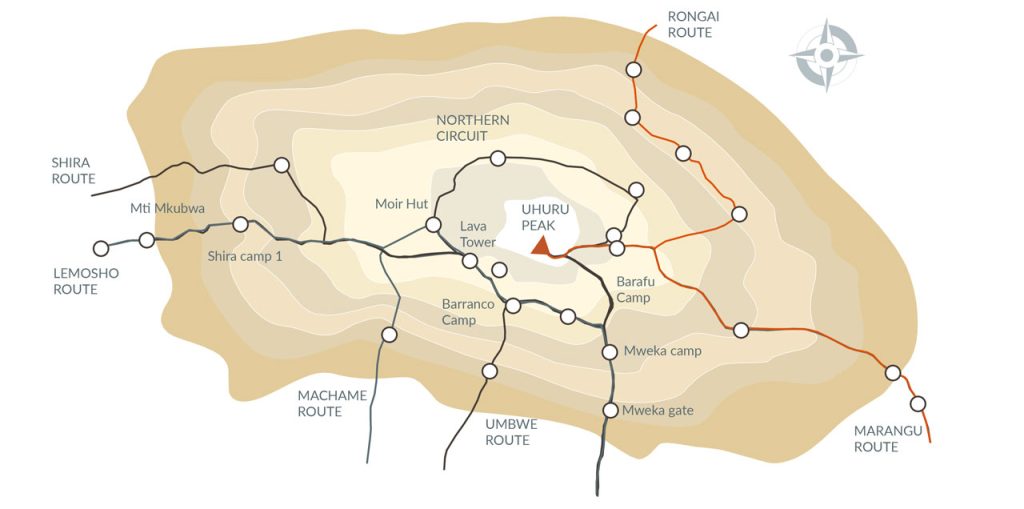
Why Choose the Rongai Route Kilimanjaro?
The Rongai Route is a unique and attractive option for climbers seeking a quieter Kilimanjaro climb.
Key advantages include:
✔ Only northern approach to Mount Kilimanjaro
✔ Quieter and less crowded trail
✔ Gradual and steady ascent profile
✔ Good option during the rainy season
✔ Wide open views toward Kenya
✔ Descent via a different route (Marangu)
Landscape and Scenery
The Rongai Route offers a different perspective of Mount Kilimanjaro compared to the southern routes.
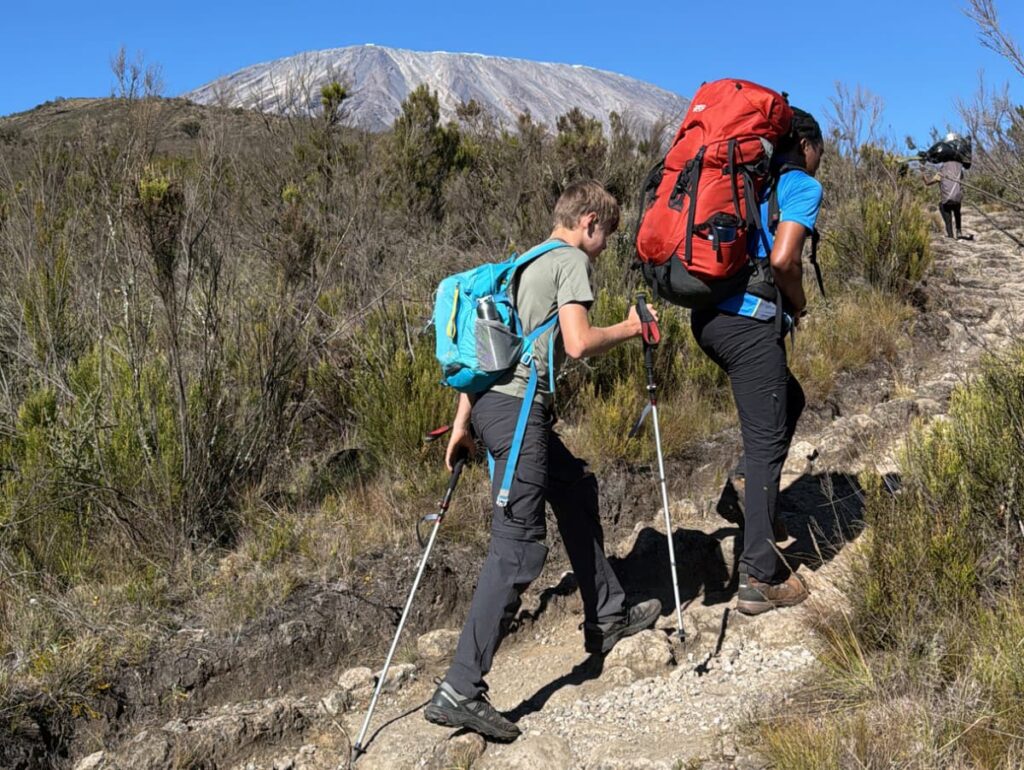
The climb begins in open forest and farmland areas before entering the moorland zone. As trekkers gain altitude, the landscape becomes more rugged and volcanic, eventually reaching the alpine desert near Kibo Hut.
Although the scenery is less dramatic than routes like Machame or Lemosho, the northern views toward Kenya and the quiet environment create a unique wilderness experience.
Difficulty
The Rongai Route is considered moderately challenging. The trail has a gradual slope, making it physically manageable for many trekkers.
However, because the route offers fewer opportunities for acclimatization compared to Machame or Lemosho, climbers should allow additional days for proper altitude adjustment.
How to Prepare for the Rongai Route
Climbing the Rongai Route on Mount Kilimanjaro is an exciting adventure that requires proper preparation. Although the Rongai Route is considered a quieter and moderately challenging trail, climbers still need good physical fitness, suitable equipment, and proper acclimatization to reach the summit successfully.
Physical Preparation
Before attempting the Rongai Route, it is recommended to start training several weeks in advance. Regular hiking, walking, running, or cycling helps improve endurance and strength. Training on hills or uneven terrain can also prepare your body for the conditions you will encounter on the mountain.
Acclimatization and Altitude Awareness
Altitude is one of the biggest challenges when climbing Mount Kilimanjaro. Choosing a longer itinerary, such as a 7-day Rongai Route climb, increases your chances of successful acclimatization and reaching the summit safely.
Proper Gear and Equipment
Having the right equipment is essential for a comfortable climb. Important items include warm clothing, waterproof jackets, hiking boots, gloves, and a good sleeping bag. Temperatures can drop significantly at higher altitudes, especially during the summit night you can see your kilimanjaro pack list here.
Mental Preparation
Climbing Kilimanjaro requires determination and patience. Climbers should maintain a positive attitude and follow the advice of experienced guides throughout the trek.
Summit Success Rate
Summit success rates on the Rongai Route depend on the itinerary length.
Typical success rates are:
5 Days Rongai Route 60–65%
6 Days Rongai Route 70–75%
7 Days Rongai Route 80–85%
Climbers who choose the 7-day Rongai Route itinerary generally have the highest success rate because the additional acclimatization day helps the body adjust to the altitude before the summit attempt.
All climbs take place inside Kilimanjaro National Park and are guided by licensed professionals approved by Tanzania National Parks Authority to ensure safety and proper mountain procedures.
Park Regulations and Permits
Rongai route is located inside Kilimanjaro National Park and require official park permits issued by the Tanzania National Parks Authority. The park authority manages trekking activities, protects the mountain’s environment, and ensures that climbers follow conservation regulations during their ascent. For official information about park rules, conservation policies, and visitor guidelines, you can visit the Kilimanjaro National Park website.
Pros and Cons
Pros
• Quiet and less crowded route
• Gradual ascent profile
• Beautiful northern views
• Good option during rainy seasons
• Unique approach to Kilimanjaro
Cons
• Less dramatic scenery compared to Machame or Lemosho
• Fewer acclimatization opportunities
• Longer travel time to the starting gate
Starting Point and Route Experience
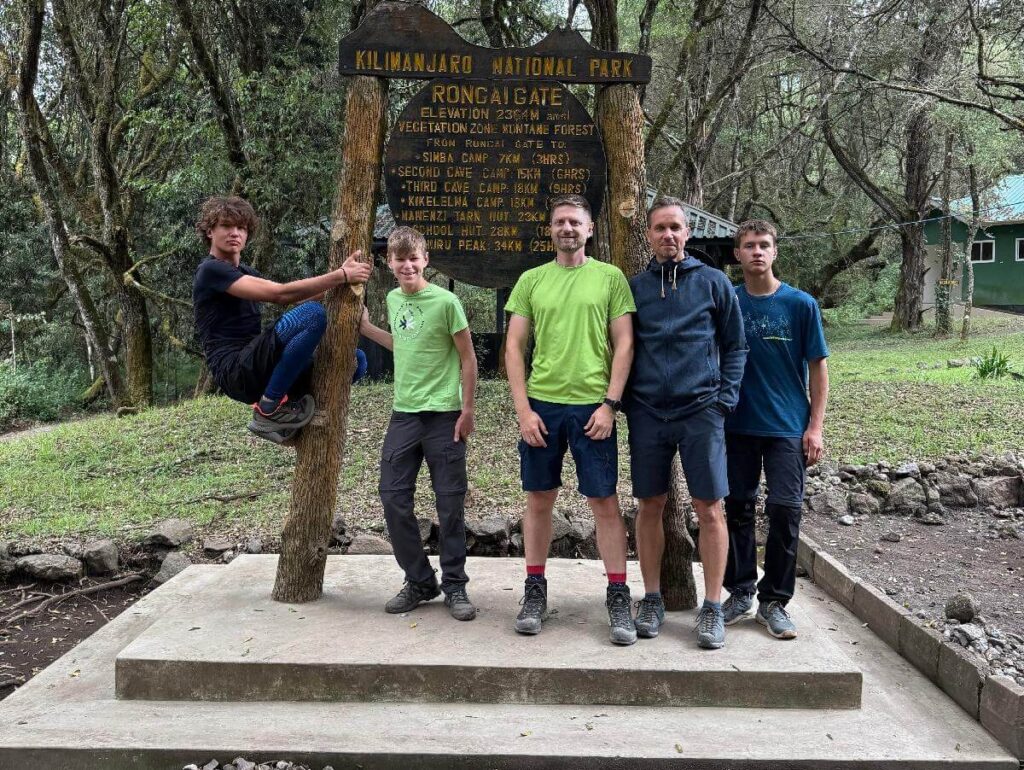
The Rongai Route begins at Nalemoru Gate, located near the Kenya border on the northern side of Mount Kilimanjaro.
The first days of trekking pass through open forest where wildlife such as colobus monkeys and various bird species may be seen. As the trail climbs higher, trekkers enter the moorland and alpine desert zones before reaching Kibo Hut.
From Kibo Hut, climbers attempt the summit via Gilman’s Point, continuing to Uhuru Peak, the highest point in Africa.
The descent is completed via the Marangu Route, offering a different perspective of the mountain.
Rongai Route vs Machame and Lemosho
Compared to Machame and Lemosho, the Rongai Route Kilimanjaro offers a quieter and more remote trekking experience.
While Machame and Lemosho provide more dramatic scenery and better acclimatization profiles, Rongai attracts climbers who prefer solitude and a gradual ascent.
For those seeking less crowded trails and wide northern views, Rongai can be a very appealing option.
Rongai Route Itinerary Options
The Rongai Route can be climbed using several itinerary options:
• 5 Days Rongai — shorter option
• 6 Days Rongai — moderate itinerary
• 7 Days Rongai — recommended for better acclimatization
Longer itineraries provide a safer and more comfortable climb.
Professional Guides
All Rongai Route climbs are led by experienced local mountain guides who understand the northern approach, weather conditions, and proper acclimatization techniques.
Our team supports climbers from the moment they arrive in Moshi until the summit attempt and descent.
What you can expect on every Rongai climb
✔ Professional mountain guides and dedicated support crew
✔ Daily health checks and altitude monitoring
✔ Quality camping equipment and freshly prepared meals
✔ Gradual acclimatization schedule
✔ Small groups and personal support throughout the trek
Plan Your Rongai Trek
We recommend arriving in Moshi at least one day before your climb for a full briefing and equipment check.
Our team can assist with:
• Airport transfers from Kilimanjaro International Airport
• Accommodation before and after the trek
• Equipment rental and trekking preparation
• Detailed climb briefing with your guide
Climbing Kilimanjaro via the Rongai Route offers a quieter and rewarding adventure with beautiful northern views of the mountain.